Somewhere in your organization, someone has said it out loud: “Our brand feels dated.”
It’s usually said after a pitch that didn’t land, a new competitor’s slick website, or a sales deck that looks like it was built by three different people. The instinct that follows is to tear it all down and start over. That instinct is often wrong, and it can be expensive.
A full rebrand is a major business decision. A refresh is a targeted tune-up. Choosing the wrong one means either overspending to solve a small problem or underspending on a problem that won’t go away. Here is how to tell which one you need.
Rebrand or Refresh? Understanding the Difference for Your Brand
A brand refresh updates how your brand looks and sounds while keeping its core intact. Your name, positioning, and promise stay put. The work usually covers a modernized logo, a tightened color palette, cleaner typography, better imagery, and updated templates. Think of it as a new coat of paint on a sound building.
A rebrand changes what your brand is: its strategy, positioning, name, story, and identity. It is a response to a change in the business itself, such as a new audience, a new offering, a merger, or a reputation you need to shed. It is a new foundation, and everything built on it changes too.
The simplest test is this: a refresh fixes how you look; a rebrand fixes who you are.
Signs you probably need a refresh
Your business is healthy and your strategy still holds, but the visuals haven’t kept up. Look for these signals:
- Your brand looks like it’s from a different era. The logo, fonts, and photography feel a decade behind the quality of your work.
- Your materials are inconsistent. The website, social profiles, proposals, and signage don’t look like they belong to the same company.
- Your website is holding you back. Customers love your service, but your site is slow, hard to navigate, or not built for mobile.
- Your brand doesn’t scale. The logo breaks down in small sizes, on social avatars, or in motion, and it was never designed for digital-first use.
- Your positioning is right; your presentation isn’t. When people meet you, they understand what you do and why it matters. The look just undersells it.
If most of this sounds familiar, a refresh will likely get you what you need in less time and at a fraction of the cost of a full rebrand.
Signs you need a rebrand
Cosmetic updates won’t fix a strategic mismatch. Consider a rebrand if:
- Your business has fundamentally changed. You’ve added services, moved upmarket, entered new markets, or outgrown the category your name implies.
- You’re merging or being acquired. Two identities need to become one credible one.
- Your reputation needs a reset. Negative associations have attached themselves to your name or look, and a fresh coat of paint won’t shake them.
- You’re invisible next to competitors. In a crowded field, you look and sound like everyone else, and no amount of polish will differentiate you without a sharper strategy.
- Your audience has shifted. The people you now want to reach see your brand as not for them.
- Your name is a liability. It’s hard to spell, hard to say, legally risky, or no longer describes what you do.
A rebrand starts with strategy, not logos: research, positioning, messaging, and naming come first, and the visual identity is the outcome. If an agency starts by showing you logo options, be cautious.
A quick self-audit
Answer these honestly, ideally with your leadership team:
- Would you still describe your business the same way you did five years ago? If yes, lean toward a refresh. If no, lean toward a rebrand.
- Do customers misunderstand what you do? That is a positioning problem, which points to a rebrand.
- Do customers understand you but underestimate you? That is a presentation problem, which points to a refresh.
- Is the problem in one place or everywhere? A weak website is a refresh-sized problem. Confusion across every touchpoint suggests something deeper.
- Do you have the budget and internal bandwidth for a full transition? A rebrand touches signage, packaging, web, sales materials, email, and team culture. Be honest about what you can execute well.
The middle path: an evolutionary rebrand
It’s rarely all or nothing. Many of the smartest brand moves sit in between: keeping the equity you’ve built (your name, a recognizable color, a familiar mark) while rebuilding the strategy and system underneath. This preserves recognition while repositioning you for where you’re going.
The right scope depends on what your brand has earned and what it needs to become. That is a judgment call, and it’s where an experienced creative partner earns their keep.
Your brand lives (and dies) online
Whichever path you choose, the website is where the work is judged first. A refreshed identity on a slow, outdated site sends mixed signals. For most organizations, brand work and web design and development should be planned together, so the identity is built for real-world use from the start: responsive layouts, accessible color contrast, motion, and social formats.
The same goes for how your new look reaches people. Once the identity is set, digital marketing across social, campaigns, and integrated channels turns a new look into visibility. Motion and video can carry the story further. Design Noon’s 2D and 3D animation and video production work shows how a brand can move, not just sit on a page.
What a good branding process looks like
Whether you’re refreshing or rebranding, expect a partner to walk you through these phases:
- Discovery and audit. Review your current brand, competitors, audience, and goals.
- Strategy. Define or sharpen positioning, voice, and the story you tell.
- Identity design. Develop the logo, color, typography, imagery, and a flexible identity system.
- Application. Roll it out across web, print, social, packaging, signage, and motion.
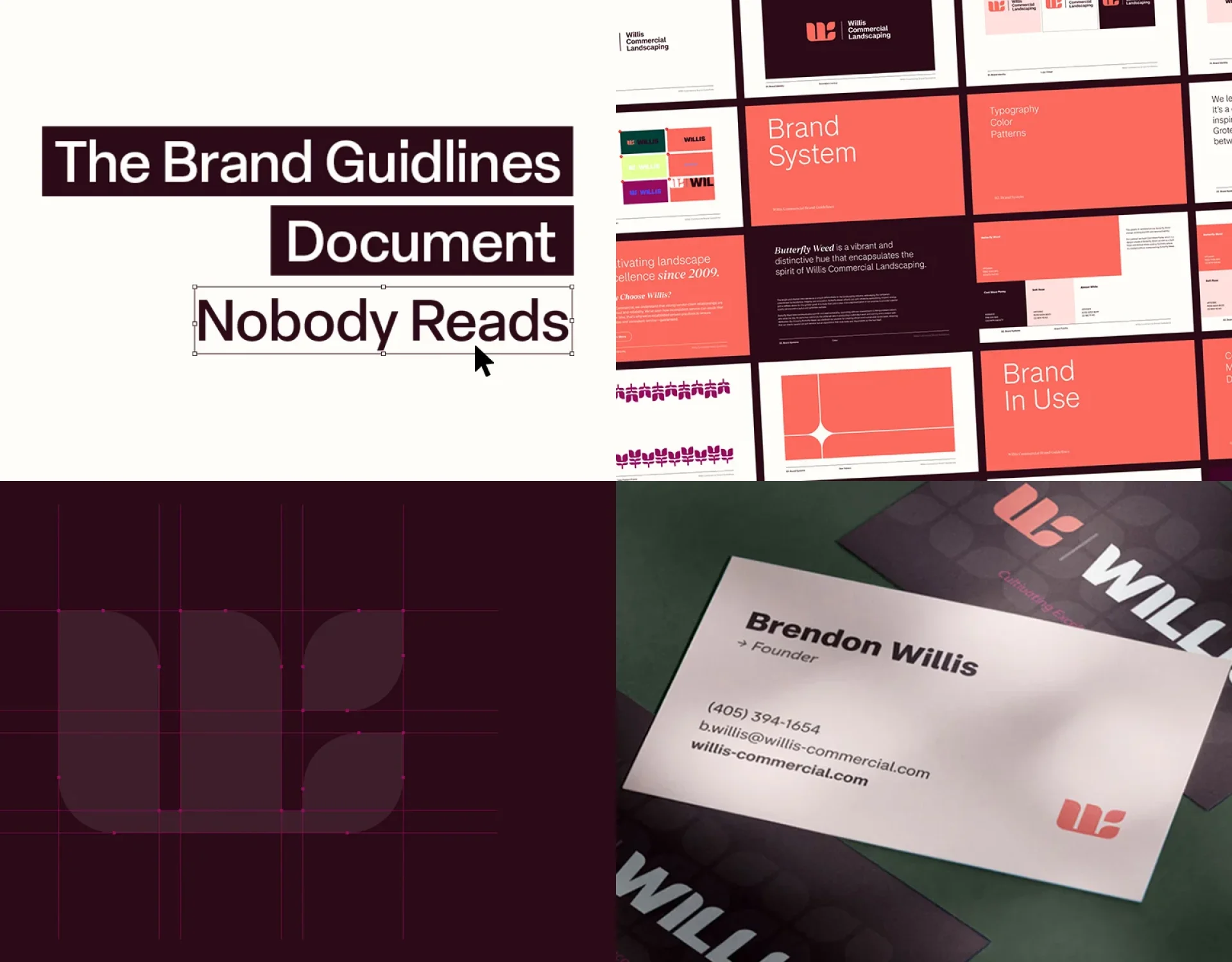
- Guidelines and handoff. Give your team the tools to use the brand consistently.
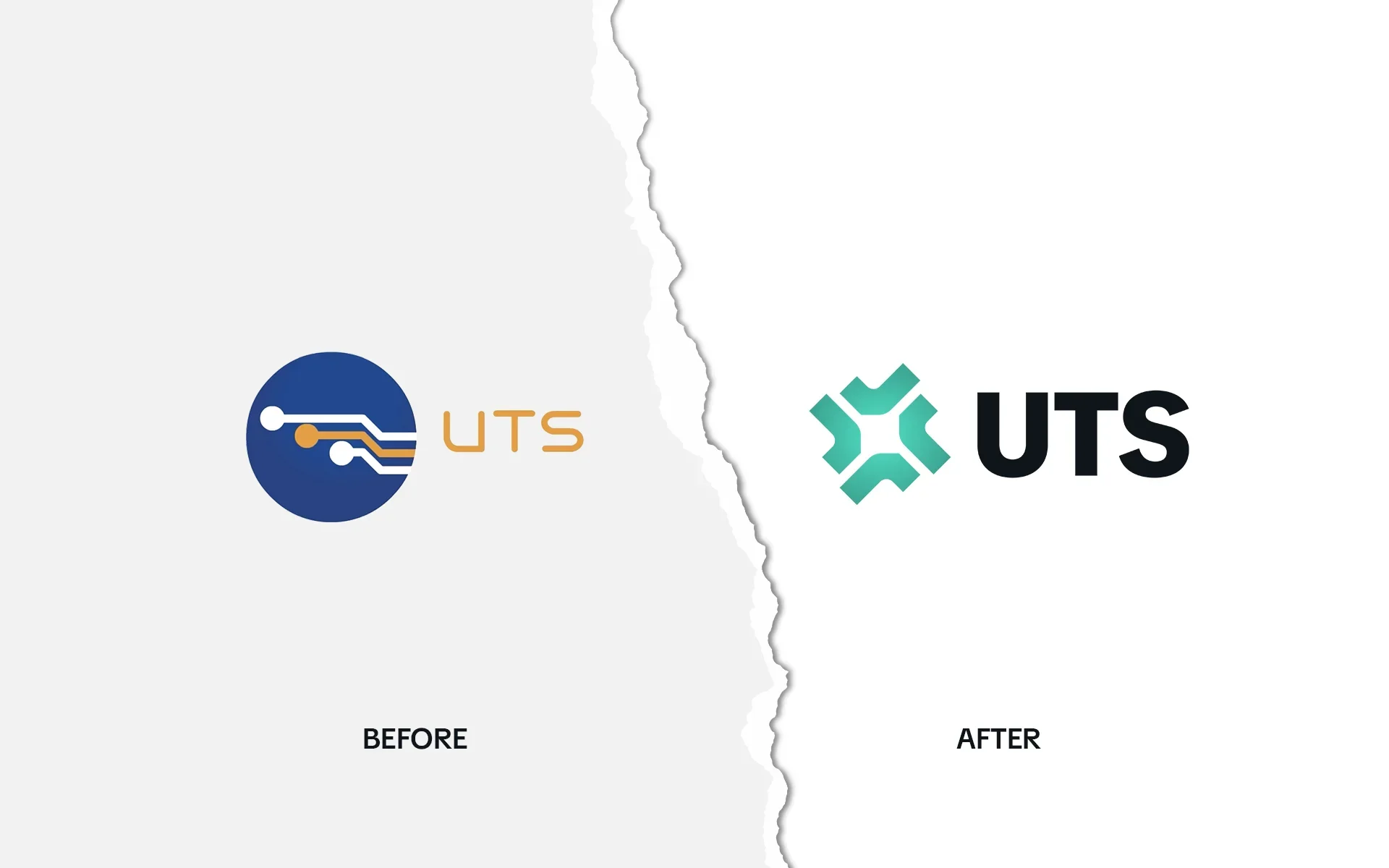
You can see how this plays out in real client work on the Design Noon portfolio, including branding projects like Beachwalk and WILLIS, and the combined branding and web work for UT Services.
Why local expertise matters in the DC region
The Washington DC market is unusual. Audiences here include government contractors, associations, nonprofits, law and consulting firms, hospitality groups, and fast-growing startups. Each has its own expectations around credibility, compliance, and tone. A brand that reads as polished in one sector can read as out of touch in another.
Working with a Washington DC creative agency means working with a team that understands how these audiences judge brands, and that can meet you in person when the project calls for it. Design Noon is based in Fairfax, Virginia, and serves organizations across the DC metro area.
So, which one do you need?
If your business is on solid ground and your brand just looks tired, start with a refresh. If your business has changed and your brand is telling an outdated story, a rebrand is worth the investment. If you’re unsure, that’s normal, and the most valuable first step is often a brand audit before you commit to a scope.
Ready to figure out which path fits? Talk to the Design Noon team about your brand, or explore their design and branding services to see how they work. If you need ongoing support after the launch, design retainers can be a cost-effective alternative to a full-time hire.