Most brands do not break at scale. They break at hire number one.
For the first year or two, the brand lives in one person’s head. The founder knows which blue is the right blue, which headline sounds like the company and which sounds like a competitor. Then someone new joins: a marketing coordinator, a sales lead, a freelance designer. They build a pitch deck on Monday, a LinkedIn banner on Tuesday and a landing page by Friday. Each one is competent. None of them match.
Nobody did anything wrong. The company simply never wrote down what it already knew. A scalable brand system is how you fix that, and it is far cheaper to build before the confusion than after.
Here is how we think about it at Design Noon, a Washington DC area creative agency working across identity, web, motion and marketing.
A logo is not a brand system
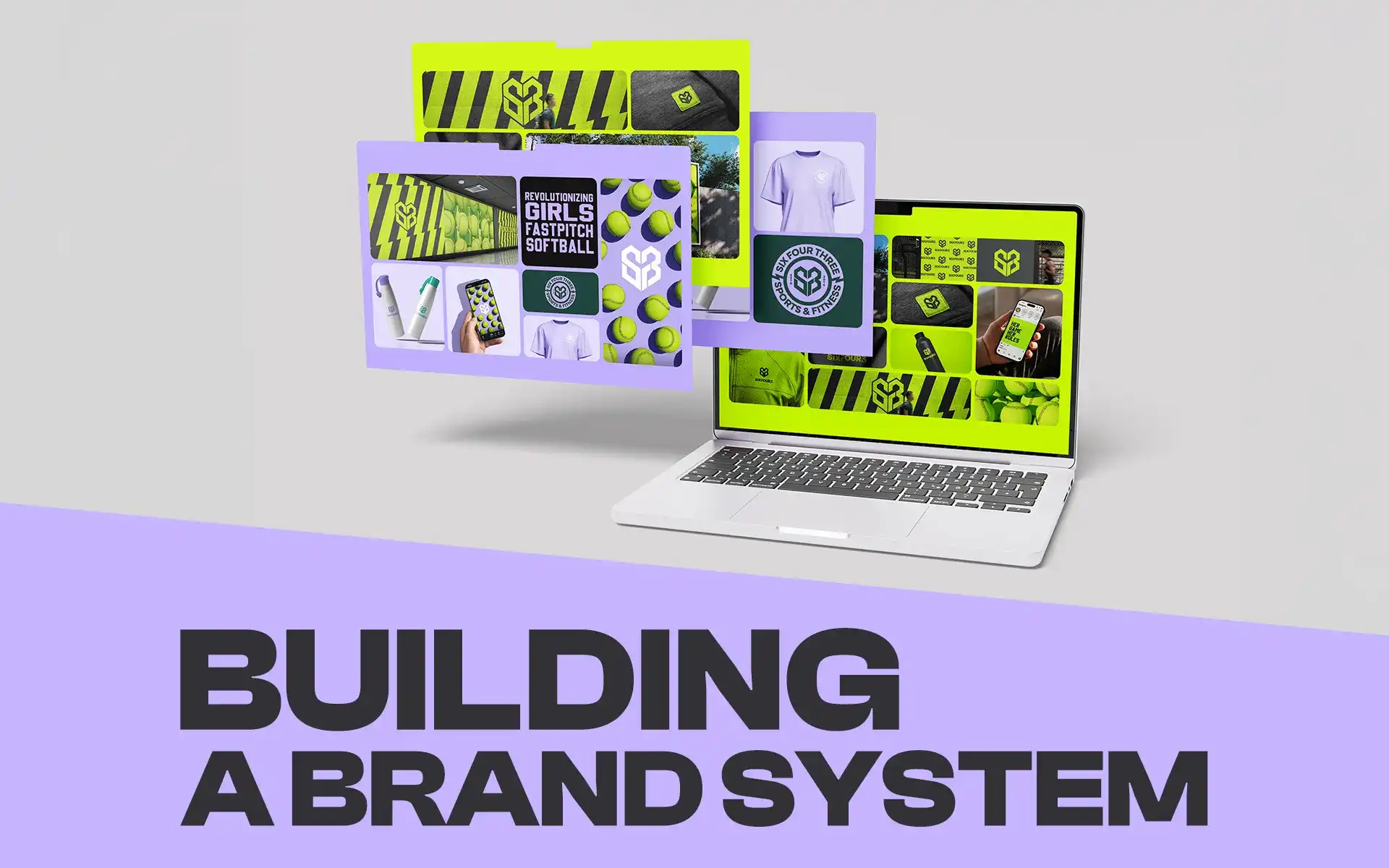
This is the most common misunderstanding we see. A logo is one asset. A brand system is the set of decisions that tells anyone, in any role, how to make the next hundred assets without calling you.
A logo answers “what are we called and what do we look like.” A system answers harder questions:
- What do we do when the logo sits on a photograph?
- Which typeface carries a headline and which one carries a footnote?
- How loud is our color palette allowed to get?
- How do we sound in a sales email versus a social caption?
- What does a finished, on-brand piece look like, and what is clearly off?
If a new hire cannot answer those without asking you, the system is not finished. It is a logo with good intentions.
The five layers of a brand system that holds up
There is no single correct structure, but the systems that survive growth tend to have the same five layers.
1. Strategy: the reason behind every other choice
Before anyone opens a design tool, the brand needs a position. Who is it for, what does it believe, and what makes it different from the three competitors a customer is also considering?
This layer is short on purpose. A positioning statement, a few brand principles and a clear audience definition. Its job is to give your team a way to settle arguments. When two people disagree about a design, the question becomes “which one is closer to who we say we are?” rather than “which one do you like better?”
2. Identity: the visual core
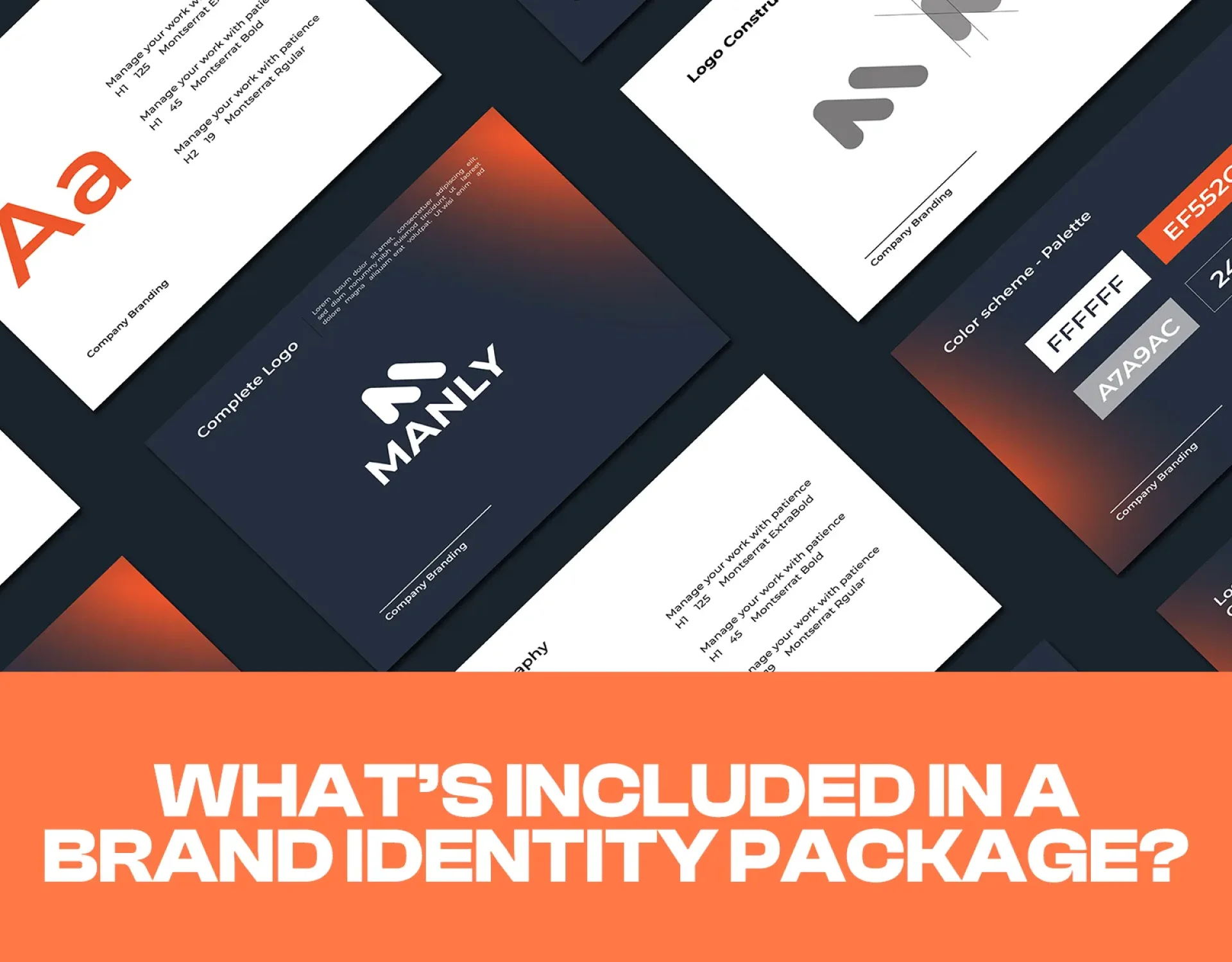
This is the part most people picture: logo and its variations, color palette, typography, iconography, imagery style and graphic devices. The difference between a nice identity and a scalable one is range.
A scalable identity includes a horizontal and stacked logo, a small-space mark for favicons and social avatars, a one-color version, and clear rules for backgrounds. It specifies color by role, not just by swatch: primary, accent, neutral, and what each is for. It names fonts by job. This is the work behind our design and branding practice, and it is where most of the future time savings come from.
3. Voice: how the brand sounds
Visual consistency gets noticed. Verbal consistency gets trusted. Yet voice is usually the first thing to drift once more people start writing.
Keep it practical. Three or four voice traits, each with an example of “we say this, we do not say that.” Add guidance for the places your team actually writes: website copy, emails, social posts, proposals. For website copy in particular, Google Search Central’s guidance on creating helpful content is a useful benchmark for writing people-first pages that serve your audience. One page of real examples beats ten pages of adjectives.
4. Templates and components: the system in motion
This is the layer that makes a brand system scalable in practice. Principles do not save time. Templates do.
If your team creates the same things repeatedly, build them once, properly:
- Presentation and pitch deck templates
- Social post and carousel layouts
- One-pagers, case study and proposal formats
- Email signatures and newsletter shells
- Event, trade show and packaging formats where relevant
A marketing coordinator with a good template produces on-brand work in an hour. Without one, they produce something creative and wrong in a day.
5. Governance: who decides, and how
The least glamorous layer is the one that keeps the rest alive. Someone has to own the system. Decide who approves exceptions, where the master files live, how updates are communicated and when the system gets reviewed.
Without an owner, a brand system becomes a PDF that everyone downloaded once.
Your website is part of the system, not separate from it
Companies often treat the website as its own project, with its own look, built by a different team on a different timeline. Then the brand and the site slowly diverge, and the site, which is usually your most visited asset, ends up being the least consistent.
A scalable brand system extends into the web layer: reusable page components, typography that maps to real CSS, color tokens, button and form styles, and rules for photography and motion. When the identity and the build share the same logic, adding a new service page or campaign landing page stops being a design project and becomes an assembly job.
That is why we pair identity work with web design and development. The same team that defines the system builds the components that carry it, so nothing gets lost in translation. You can see that thinking across our portfolio, including branding and web work for UT Services and identity work for Willis and Beachwalk.
Motion and video: plan for them early
Brands now live in motion as much as in print: social video, explainers, product animation, animated logos. If the system only covers static assets, every video becomes a one-off with its own interpretation of your brand.
Even simple motion principles help. How does the logo animate in? How fast do elements move? What does a title card look like? Decide it once, and your 2D and 3D animation and video production work will feel like it came from the same company as your website.
When to build the system: a simple test
You do not need a hundred-page brand book to hire your first marketer. But you probably need a real system if any of these sound familiar:
- You are about to hire or onboard marketing, sales or design help.
- You rely on freelancers who each interpret the brand differently.
- Your decks, website and social channels look like they belong to three companies.
- You are launching a new service line, product or location.
- You keep saying “I will just fix it myself” when something goes out off-brand.
The last one is the clearest signal. If you are the quality control, the brand does not scale. You do not either.
What a good brand system costs, and what it saves
A brand system is an up-front investment, and it is fair to ask whether it is worth it for a small team. The honest answer is that it is the cheapest it will ever be right now. Every inconsistent asset produced before the system exists has to be redone, and every new person added without one multiplies the cleanup.
For teams that want ongoing support after the system is built, a design retainer is often a smarter model than a full-time designer or art director: you get senior creative direction and production capacity, scaled up or down as your needs change.
Tying it to digital marketing
Consistency is not only an aesthetic win. It is a marketing one. Repeated, recognizable visuals and a steady voice across your site, ads, email and social channels make every impression build on the last. Fragmented branding does the opposite: it makes people re-learn who you are every time they meet you.
A scalable brand system also makes digital marketing faster and cheaper to run. Ad creative, landing pages and campaign assets can be produced from approved components instead of from scratch, which means more testing and fewer bottlenecks. For Washington DC area organizations competing for attention in crowded sectors like government contracting, professional services, hospitality and nonprofits, that speed and recognizability matter.
A practical starting checklist
If you want to begin before engaging an agency, start here:
- Audit what exists. Collect every deck, social profile, web page and printed piece. Lay them side by side and note what is inconsistent.
- Write your positioning in plain language. Audience, promise, difference. Keep it to a paragraph.
- Lock the visual basics. Final logo files, a defined palette, two typefaces at most, and rules for use.
- Draft voice guidance with real examples. Pull your best-performing emails and posts and describe what makes them sound like you.
- Build the three templates your team uses most. Usually a deck, a social format and a one-pager.
- Assign an owner. One named person, with the authority to say no.
That gets you a working foundation. If the audit shows deeper gaps, or the brand itself needs rethinking, that is when bringing in a creative partner pays for itself.
Building a brand that grows with you
The goal of a brand system is not rigidity. It is freedom: the freedom to hand work to a new person, a freelancer or an agency and trust that the result will look and sound like you.
Design Noon is a full-service creative agency serving Washington DC, Northern Virginia and Maryland, with expertise across branding, web design and development, animation, video and digital marketing. If your brand is about to meet its first hire, or its tenth, get in touch with our team and we will help you build the system before the growth makes it harder.