A founder’s first branding move is usually to get a logo. They hire a designer or run a contest, pick a color they like, and call the brand done. Six months later the business has a nice mark and no momentum. Customers can’t say what the company stands for, the website looks like it belongs to someone else, and the social posts feel unrelated to the sales deck.
The logo wasn’t the problem. The problem was treating the logo as the brand.
This confusion is the most common one we see when companies come to a creative agency. Clearing it up changes how you spend your marketing budget.
A logo is a signature. A brand is a reputation.
A logo is a visual identifier, the mark you put on a storefront, a package or a website header. Its job is recognition. It should be simple, distinctive and flexible enough to work at the size of a favicon or the side of a building.
A brand is bigger and mostly lives in other people’s heads. It’s the sum of what customers expect, feel and say about you when you’re not in the room. Marty Neumeier’s well-known definition describes a brand as a person’s gut feeling about a product, service or company. You don’t control that feeling. You influence it through everything you do. For a deeper explanation, explore this guide to understanding what a brand is.
Nike’s swoosh is a useful example. The shape itself is simple, and it was famously purchased from a student designer for a small fee. It didn’t become powerful because of how it was drawn. It became powerful because decades of athletes, advertising and product decisions filled it with meaning. The logo is the container. The brand is what you pour into it.
What a brand includes that a logo doesn’t
If the logo is one piece, here is the rest of the set:
- Positioning. Who you serve, what you do better than anyone else, and what you deliberately don’t do.
- Voice. How you sound in a headline, an email, a support reply or a pitch.
- Visual system. Typography, color, imagery, layout rules, motion and iconography that work together as one language, not one mark.
- Experience. How easy it is to find you, buy from you and get help. A beautiful identity can’t make up for a confusing website or a slow reply.
- Consistency. Whether a stranger would recognize the same company across your website, packaging, video, social feed and trade-show booth.
That last point is where most small and mid-sized companies leak trust. Each piece might look fine alone, but nothing connects them. Customers read inconsistency as unreliability, even if they can’t say why.
Why founders mix them up
There are three common reasons:
- A logo is tangible. You can approve it, send it to a printer and see it on a business card by Friday. A brand strategy is harder to hold, so it gets postponed.
- Logo pricing is cheap and quick. Low-cost logo services reinforce the idea that branding is a one-time purchase and not a foundation.
- Early-stage urgency. When you’re trying to launch, “just a logo for now” sounds practical. It often leads to rebranding twice in three years.
None of this is a character flaw. It’s what happens when the market sells the visible part and leaves out the structure behind it.
The cost of a logo without a brand
The logo-first approach tends to produce the same problems:
- Sameness. Without a clear point of view, the identity drifts toward category clichés and blends in with competitors.
- Wasted marketing spend. Ads, social content and campaigns can’t build recognition if there’s no consistent identity or message to repeat.
- Weak web presence. A website built without brand direction becomes a template with your logo dropped in, which hurts both conversion and credibility.
- Pricing pressure. When customers can’t see what makes you different, the only thing left to compare is price.
Brand clarity does the opposite. It makes every later decision easier, from which campaign to run to which designer to brief to which page to build next.
How to build a brand, not just a logo
Here is a practical order of operations for founders and marketing leads:
1. Start with strategy, not sketches. Define your audience, your promise and your edge. If you can’t explain in two sentences why someone should choose you, no logo will do it for you.
2. Build the identity as a system. A strong brand identity includes the logo, but also the color palette, typography, imagery style and the rules for using them. That system is what keeps a growing team consistent.
3. Give it a voice. Write a short guide covering tone, vocabulary and a few “we say this, we don’t say that” examples. It will save you hours every month.
4. Put it to work on your website. Your site is the place where most people form their first judgment about you. Web design and development should express the brand through layout, copy, speed and interaction, not simply display the logo at the top.
5. Extend it across channels. Once the foundation exists, digital marketing across social, email, campaigns and paid media compounds recognition instead of fragmenting it. Motion can carry the brand further, and 2D and 3D animation and video production often do this better than static assets.
6. Maintain it. Brands aren’t finished at launch. Ongoing updates, new campaign assets and fresh content keep the identity alive. For many growing companies, a design retainer is more cost-effective than hiring a full-time graphic designer or art director.
What this looks like in practice
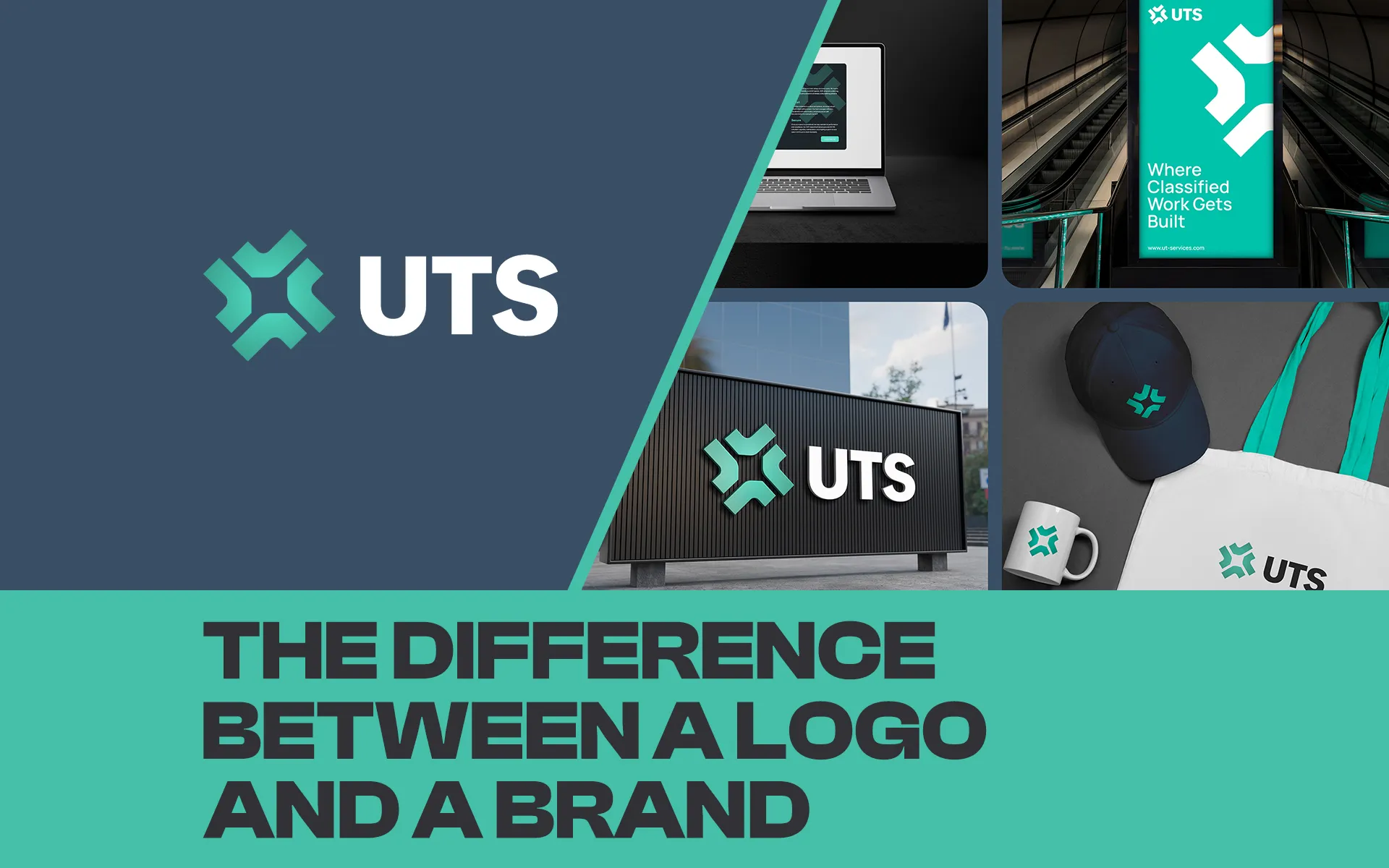
Design Noon’s approach to branding follows this same logic. On projects like Beachwalk and WILLIS, the work is about building an identity that can carry a business, not only a mark. For UT Services, branding, web design and development, and 3D animation worked together as a single system. You can browse more in the portfolio.
The pattern holds across industries. The companies that grow with their branding are the ones that treat identity, website and marketing as parts of one decision, not three separate purchases.
A quick self-check: do you have a logo or a brand?
Ask yourself:
- Can everyone on my team describe what we stand for in the same words?
- Would a stranger recognize our website, social posts and printed materials as the same company?
- Do we have written guidelines for color, type, tone and imagery?
- Do customers describe us the way we want to be described?
If you answered “no” to two or more, you likely have a logo and the beginnings of a brand. That’s a common place to be, and it’s fixable.
Where to go from here
A logo is something you make once. A brand is something you build, protect and grow. The founders who understand the difference early spend less on rework, market more clearly and get recognized faster.
If you’re a business in the Washington DC area and you’re ready to move from “we have a logo” to “we have a brand,” Design Noon is a full-service creative agency working across branding, web, motion and digital marketing. Get in touch to talk through where your brand stands and what it needs next, or learn more about the agency.