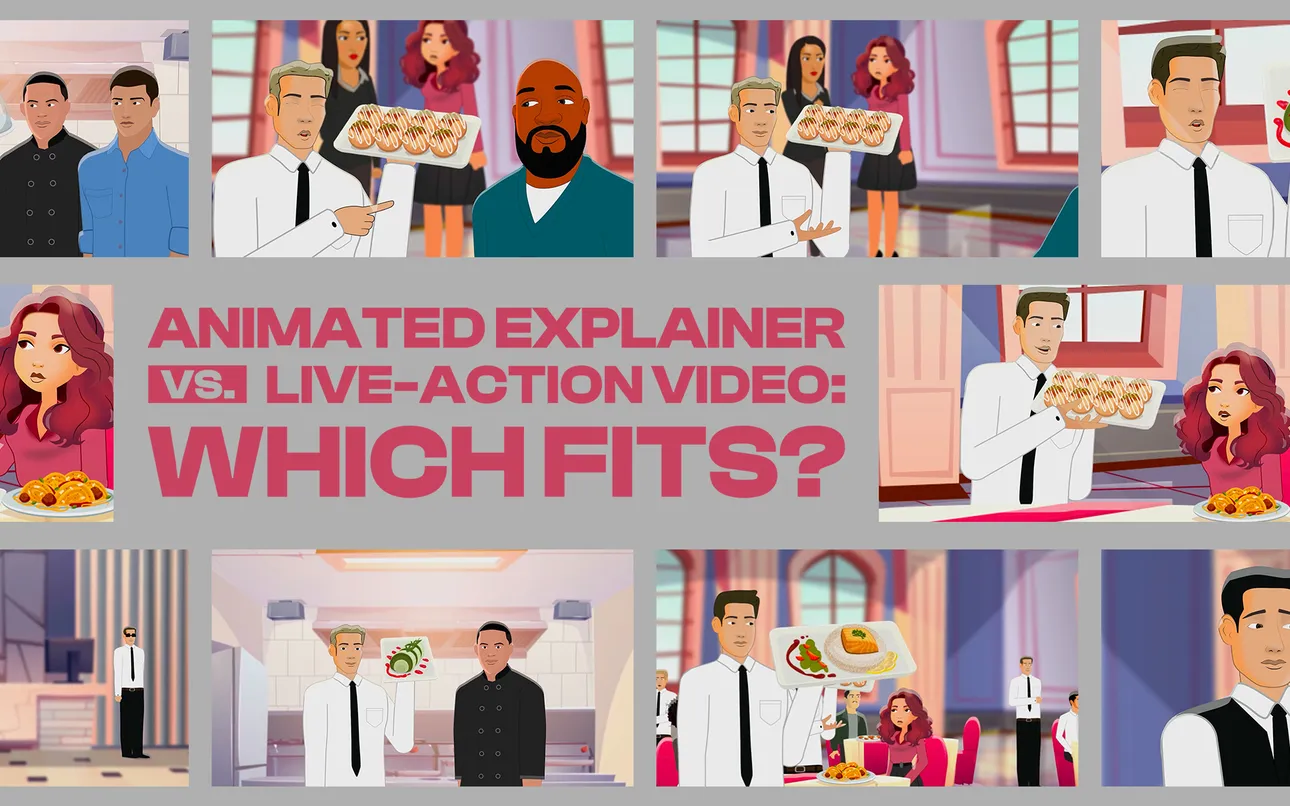
Start with what your audience needs to see to understand or trust your message. If they need to follow a process that happens behind the scenes, animation can make each step visible. If they need to meet the people they’ll work with or see your product in a real setting, live action gives them that context.
When an animated explainer makes sense
Choose animation when the most important part of the story is hard to film. A software company might use animated diagrams to show how data moves between systems. A training team might illustrate a kitchen procedure step by step, highlighting exactly what a new employee should look for.
When live-action video makes sense
Choose live action when the real people, place, or product are central to the message. A company introducing its service team can show how employees work with clients. A manufacturer can film an operator using a machine so buyers can see its scale, controls, and working environment.
When it makes sense to combine both
Use each format for a specific job. For example, film a technician installing a product, then use a short animated cutaway to show what happens inside it once it’s running. Before writing the script, list the moments your audience needs to see and decide how to show each one.
How to choose a format before you write the brief
Finish this sentence: After watching, our audience should be able to… Then list the two or three shots that would help them get there. If the most important shot is a process happening inside a machine, start with animation. If it’s a technician showing how the machine operates on a real shop floor, start with live action.
Also consider what you already have and what might change. Product drawings or screen recordings can give an animation team a starting point. Access to the right people, equipment, and location can make a live-action shoot easier to plan. If the product interface or procedure is still changing, flag those details in the brief so the production team can plan around them.
Planning a video? Explore Design Noon’s animated explainer video production and video production services.